Slide Bundling Criteria
A group of GCDs can form a bundle and be handled by a single slide only if they are all shell-able (the value of the geometric property Is Shelled is true for each) and there is a direction, D, (represented by a SetupAxis) such that all the following hold:
• All the GCDs are accessible from D.
• D is sufficiently close to orthogonal to the draw direction.
The cost model variable drawDirectionOrthogonalEpsilonForSlides specifies the threshold for being sufficiently close; this value is 30 degrees in aPriori starting point Digital Factories.
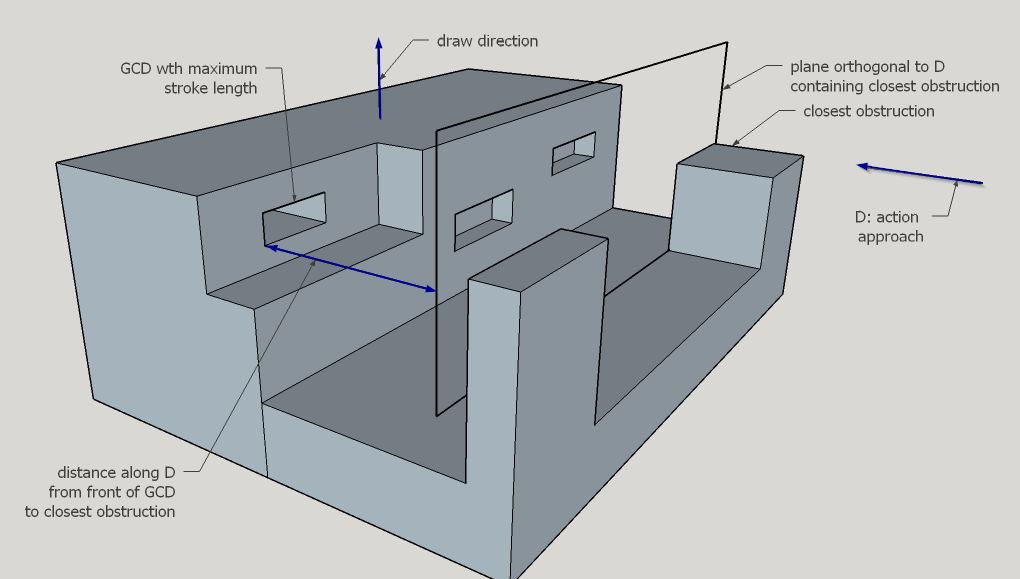
• For each GCD, if access to the GCD from D is obstructed, the obstruction is sufficiently far from the GCD.
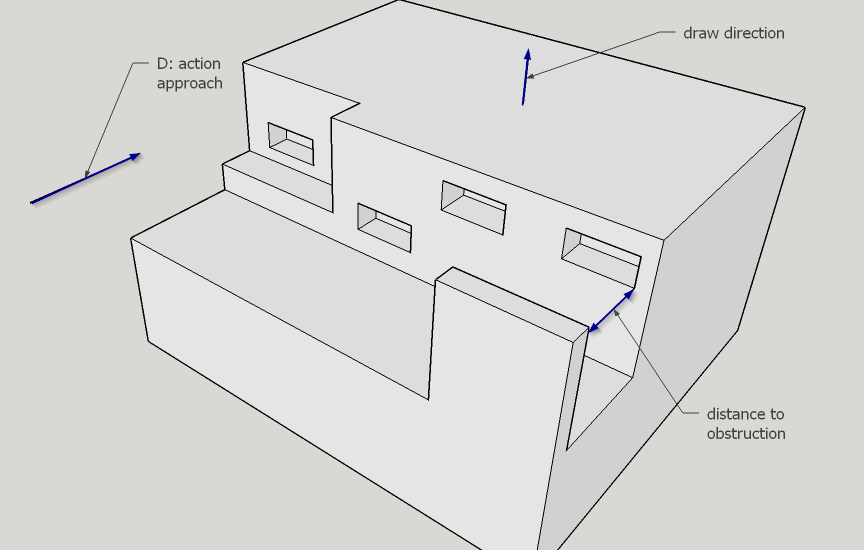
The cost model variable minimumSlideClearance specifies the threshold for being sufficiently far; this value is 196.75mm in aPriori starting point Digital Factories.
The distance between the GCD and the obstruction is the Distance to Obstruction property of the Is Accessible From relation whose value for First is the GCD and whose value for Second is the SetupAxis that represents D.
• Any two adjacent GCDs are sufficiently close (in the direction orthogonal to both D and the draw direction).
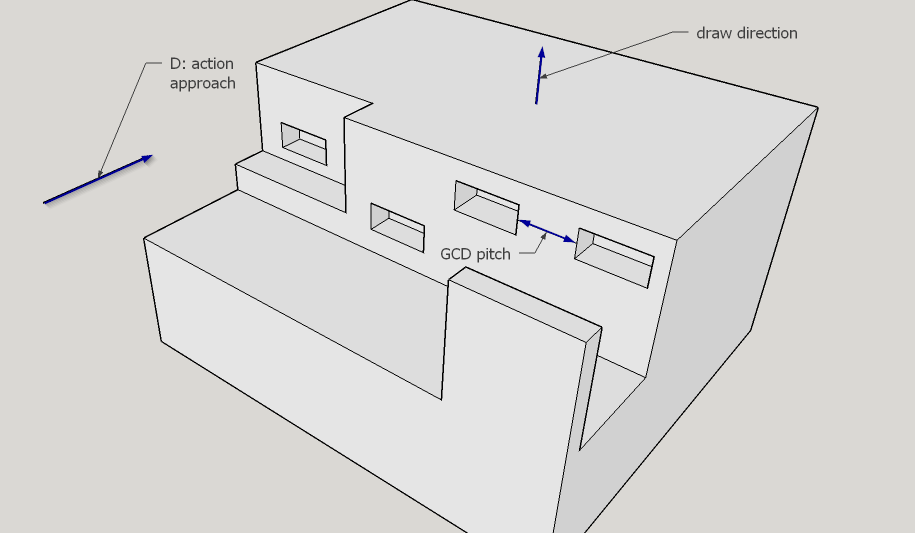
The cost model variable maxGcdPitch specifies the threshold for being sufficiently close; this value is 50.8mm in aPriori starting point Digital Factories.
• For any two adjacent GCDs that do not share the same volume, the distance between them along direction D is sufficiently small.
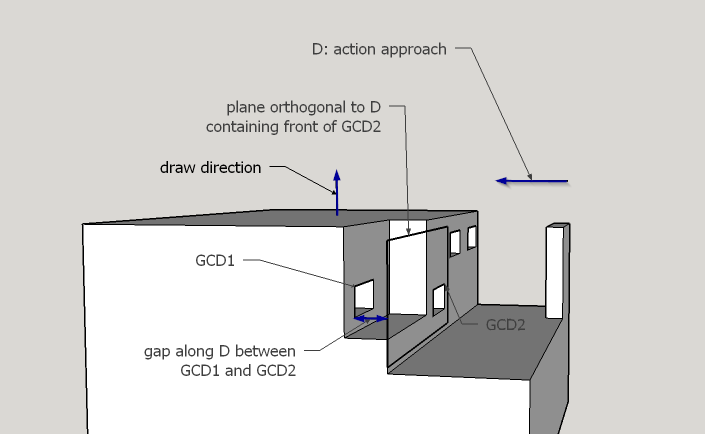
The cost model variable maxSlideDepthPitch specifies the threshold for being sufficiently small; this value is 25.4mm in aPriori starting point Digital Factories.
The distance measured is between the GCD fronts (that is, the side of the GCDs on which the slide enters).
• Each GCD is sufficiently close to the part edge. That is, for each GCD, the distance from the GCD along D to the part edge is sufficiently small.
The cost model variable maxGcdDistanceFromPartEdge specifies the threshold for being sufficiently small; this value is 25.4mm in aPriori starting point Digital Factories.
There is an exception when the slide is behind another slide (that is, there is a line in direction D that intersects both the slide under consideration and some other slide closer to the part edge). In such a case, distance to part edge is ignored.
Distance to part edge is the value of the Distance to Shadow Border property of the Is Accessible From relation whose value for First is the GCD and whose value for Second is the SetupAxis that represents D.
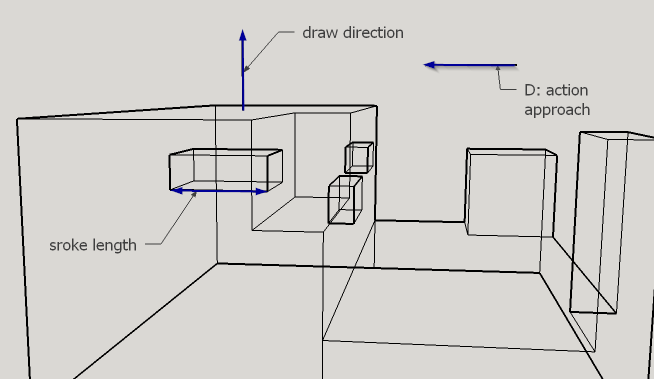
• GCDs have sufficient clearance to accommodate the slide’s stroke length and avoid die lock. That is, the depth (along D) of the deepest GCD (plus some extra depth for the action base) is less than the smallest distance between a GCD and the obstruction that is closest to its associated GCD.
• All GCDs can be manufactured by a slide that does not obstruct any volume beneath the slide. The faces under a slide must not form any kind of hook; otherwise the slide would not be pullable.
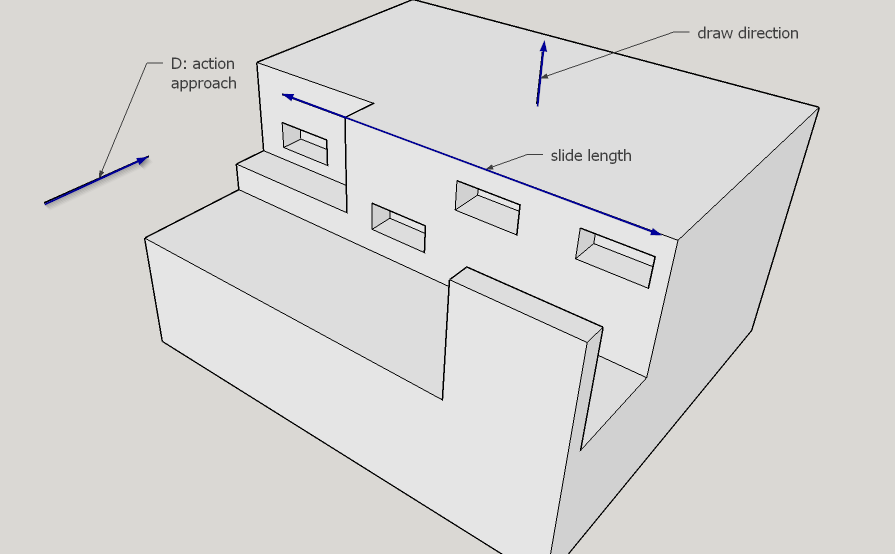
• The slide is not too long (in the direction orthogonal to both D and the draw direction).
The cost model variable maxActionLength specifies the threshold for being too long; this value is 500mm in aPriori starting point Digital Factories.
Slide length is the total GCD span in the direction orthogonal to both D and the draw direction.