Wire Harness Costing
Introduction to Wire Harnesses
Tip:
See the Introduction to Wire Harness aP Academy training course, and the Wire Harness section of the Cost Model Guide (login required) for more details.
Wire harnesses (also known as cable harnesses or wiring looms) are assemblies which mainly contain purchased components such as wires and cables, with minimal processing required. These assemblies form an infrastructure to allow for electrical power and signal transmission.
Wire Harnesses are used in aerospace, automotive, electronic equipment sectors, and in industrial machinery. For example, when using the brakes in a car, an electrical signal is sent from the brake pedal, through a wire harness, to the brake light at the rear of the vehicle.
Wire Harness Components
Tip:
See Wire Harness Processes for more details.
Wire harnesses mainly contain off-the-shelf components, which can be purchased either as single parts or in bulk. Some components require minimal additional processing before they can be assembled into a Wire Harness. Other components can be assembled as-is (without additional processing).
Components include:
-
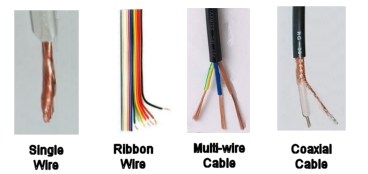
Wires. These components are purchased in bulk lengths and cut and stripped as needed on a component-by-component (wire-by-wire) basis.
Examples:
-
Dressing materials and labels, such as tape, bundling materials, and insulation. These components are also typically purchased in bulk and then processed on a component-by-component basis.
Examples:

-
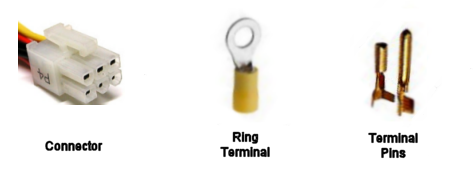
Connectors, pins, terminals, seals, and everything that goes on the ends of a Wire Harness. These components are typically purchased as-is and assembled.
Examples:
Benefits of Wire Harnesses
Using Wire Harnesses enables:
- Efficient cable management, allowing you to define a bundle of wires as a group, rather than a display of entangled wires that are difficult to distinguish.
- Easier installation: by giving a known volume of area where the trunking location can be consistently positioned within a designated zone, the installation can be a simple drop-in task. This leads to significant time and labor savings.
- Improved quality and safety: given the repetition of wire harness production. For example, within automotive, given the known placement and sheathing of the wire harness, it is less likely that short circuits will occur, and any problems that do exist can be diagnosed more quickly.
Wire Harnesses in aPriori
aPriori provide a Wire Harness plug-in, allowing:
- Electrical design engineers to determine assembly-level costs early in the design process.
- Sourcing professionals to analyze component costs for informed negotiation with suppliers from a more knowledgeable position.
- Manufacturers to optimize their manufacturing processes.
Wire Harness Installation and Setup
See the Wire Harness Installation Guide for installation instructions.
Wire Harness Costing
For a Wire Harness with normal complexity, aPriori costs the following steps:
- Preparation of the wires and cables. This step includes cutting the wires or cables to length. Also, some additional operations may be carried out such as marking, sealing, molding, sleeving, or labeling of the wires or connectors.
- Assembly of the harness on a board or jig. This includes manually laying-in the wires and cables, inserting the wire ends into connectors if necessary, tying, or taping the bundles or wires and/or sleeving the bundles. Testing is usually done at this stage and some labeling may also be carried out.
See Wire Harness Costing Workflow and Cost a Wire Harness.
Wire Harness Digital Factories
The Wire Harness plug-in uses a dedicated Wire Harness Digital Factory, imported into aP Pro and configured for your organization.
This Digital Factory contains:
- An Assembly process group, as aP Pro treats a Wire Harness BOM as an assembly.
- A User Guided process group, as users manually add additional information for aP Pro to determine the cost of the Wire Harness assembly.